There is a word for what happened to BC's private liquor store industry. The polite version is regulatory capture. The accurate version is something closer to a long con.
Here is the history, because the history matters. The BC Liquor Distribution Branch was built on a specific mandate — not to maximize alcohol sales, but to moderate them. The original logic of government-controlled liquor retail was harm reduction. Regulate the product, control the hours, limit the convenience, and you limit the damage. It was paternalistic, it was often inconvenient, and for decades it was the only option British Columbians had.
Then came private liquor stores.
The province licenced private retailers to fill a specific gap the government stores deliberately left open. Later hours. Cold product. Neighbourhood-level convenience. The private operators were not competing with the government — they were completing a system the government had intentionally left incomplete. They invested accordingly. Leases were signed. Renovations were done. Inventory systems were built. Staff were hired. Millions of dollars went into businesses built on a clear and understood arrangement: the government sells warm product in limited hours through a controlled retail footprint, and the private operator serves the community the government is not trying to serve.
It was a reasonable deal. People took it seriously. They built real businesses around it.
And then the government changed the deal.
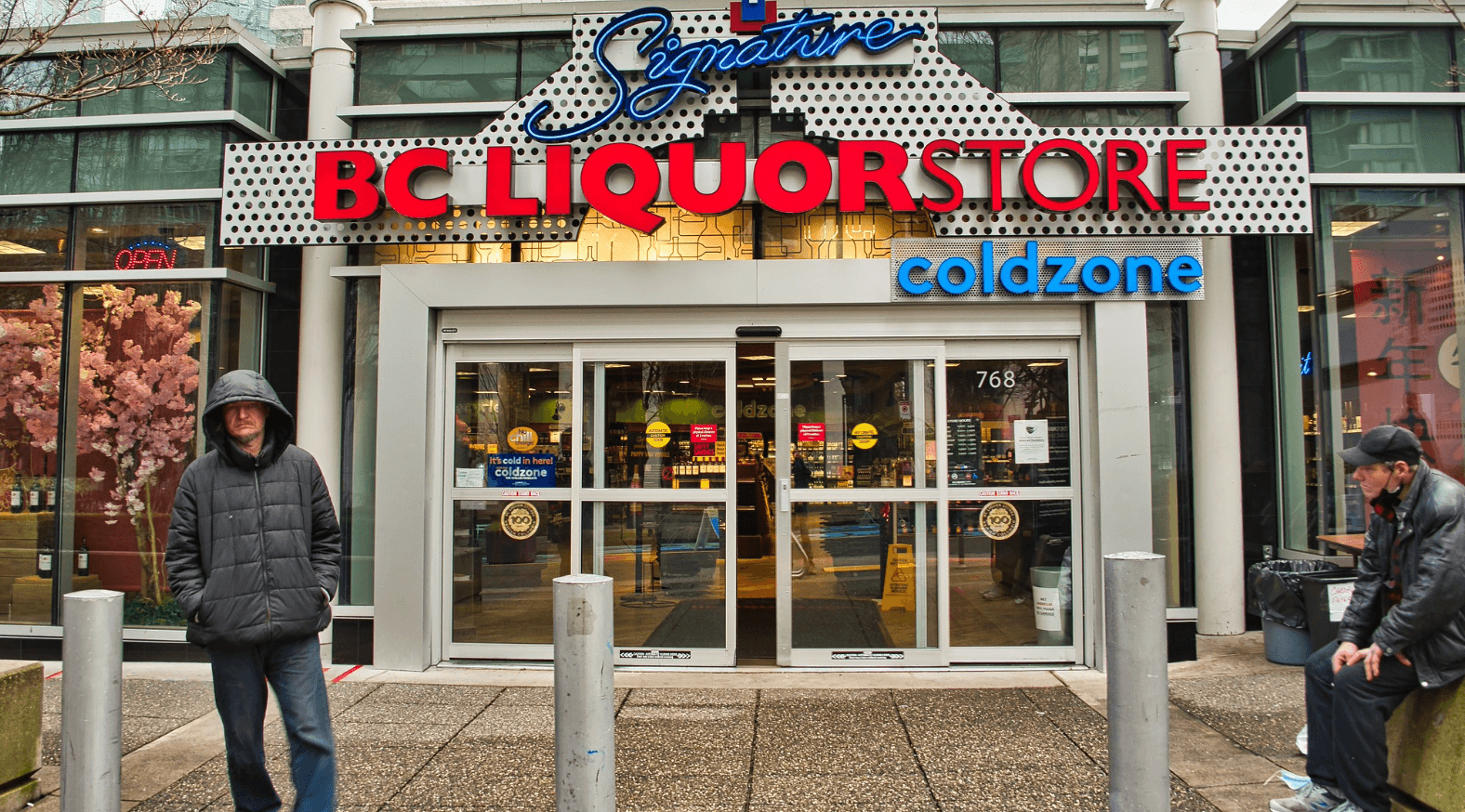
BC Liquor Stores now sell cold product. They have extended their hours. They have modernized their stores. They have launched promotional campaigns and aggressive discount programs. They have, in other words, taken every single competitive advantage that justified the private licence model — every feature that made it worth investing in — and adopted it wholesale. The original rationale for private retail, the gap the government was not filling, has been filled by the government itself.
But here is where it becomes genuinely indefensible. The Liquor Distribution Branch is not just the government's retail arm. It is also the mandatory wholesaler for every private liquor store in the province. Every private retailer in BC is legally required to purchase their inventory through the LDB. There is no alternative supplier. There is no negotiation. The LDB sets the price, the private operator pays it, and the margin left over is what the business survives on.
The LDB is simultaneously the wholesaler supplying private stores and the retailer competing directly against them. It controls the cost of goods for its own competition. It can discount product in its own stores that it will not discount at the wholesale level for private operators. It can run promotions using public infrastructure — stores built with taxpayer capital, staff paid on government salary grids, supply chains that benefit from Crown purchasing power — against businesses that have none of those structural advantages.
This is not a level playing field. It is not even a field. It is a landlord renting you a shop and then opening a competing store right next door — except their store is bigger, newer, and more gloriously appointed, the renovations paid for by the taxpayer, the staff paid on government salary grids with benefits funded by the public purse. They set your cost of stock, and they run ads on a billboard they own across the street.
The government will tell you the numbers are positive. The LDB, they will say, returns significant revenue to the province every year. This is true. It is also deeply misleading.
The LDB reports its results as a consolidated system — wholesale distribution, government retail, and regulatory functions combined into one number. Individual store profitability is not disclosed. The cost to operate each government liquor store — the rent on prime commercial real estate, the staffing costs, the management overhead, the capital expenditures on renovations and refrigeration — is buried inside a system-wide figure that includes the wholesale margin extracted from every single private store in the province.
In other words: the government may be operating loss-making retail locations and subsidizing them with the wholesale margin it extracts from the private competitors those locations are undercutting. The private operators are, in a very real sense, funding the operation that is slowly eating them alive. And nobody is required to tell them this. Nobody is required to show them the numbers. The consolidated result is presented as proof the system is healthy, while the component that is actually under pressure — private retail — gets no transparency and no relief.
There is another layer to this that rarely gets discussed. The LDB sources, imports, warehouses, markets, and distributes a category of products that it does not sell to private stores at wholesale — exclusive to government retail, according to private store operators with direct knowledge of the wholesale catalogue. Private operators cannot stock them. They cannot compete on them. And because there is no benchmark — no price at which a private store could theoretically offer the same product — the government is free to advertise these items at thirty-five and forty percent discounts against a number it invented. The discount is not off a real market price. There is no market price. Private stores cannot access the product. The "discount" is a marketing fiction built on public infrastructure, and it is a competitive weapon against businesses that have no way to respond.
The financial reporting that accompanies all of this is equally difficult to defend. No private business in this province obscures its actual operating costs the way the LDB does. Operating costs for each government retail location should be disclosed at the store level — rent, staffing, management, capital — the same way any retailer in a competitive market accounts for them. The fact that they are not is a choice. Taxpayers, who own this operation, should find that choice troubling. One likely explanation for why those costs stay buried in a consolidated figure: the numbers would expose the true cost of running a unionized government workforce in a retail environment where wages and benefits are determined through collective bargaining rather than market conditions. Private liquor stores hire from the same labour pool. They pay competitive wages without the structural protection of a government employer behind their payroll. Transparency on the LDB's per-store labour costs would make that asymmetry plainly visible — which is precisely why it does not appear.
The underlying economics of the LDB are worth stating plainly. The real money in BC's liquor system does not come from running retail stores. It comes from wholesale markups and the taxes embedded in every bottle sold in the province — through a government store or a private one. Government retail, by any honest attribution of costs, is almost certainly a money-losing enterprise. What makes the system profitable at the system level is the mandatory wholesale margin extracted from every transaction, including every transaction made by the private competitors that government stores are undercutting. The retail stores exist not because they are economically necessary but because they are institutionally entrenched. Requiring private operators to fund that entrenchment through their own cost of goods is not an accident. It is an extraction.
The people who invested in private liquor retail did so in good faith. They read the licence conditions, understood the market structure, and made decisions that would have been rational under the arrangement as it was originally designed. They did not sign up to compete against their own mandatory supplier. They did not agree to fund a government retail expansion through their wholesale purchases. They did not build businesses expecting the rules to shift underneath them after the capital was already committed and the leases already signed.
There is a version of this story where the government is simply incompetent — where no one planned the conflict of interest, where the expansion of government retail hours and cold product was driven by public demand rather than competitive strategy, where the whole thing is an accident of incremental policy drift rather than deliberate extraction.
That version is more charitable than the situation deserves.
What the private liquor store industry needs — and what it has so far not received — is a government willing to acknowledge that it changed the terms of the arrangement, that private operators made irreversible investments on the strength of those terms, and that the current structure requires the private sector to fund its own displacement.
The small operator who put their savings into a liquor store licence is not a rounding error in the province's revenue model. They are a business owner who was told the game had rules, played by those rules, and is now watching the referee move the goalposts while also suiting up for the other team.
Someone in Victoria should have to answer for that. They won't. But someone should.
The BC Liquor Distribution Branch did not respond to a request for comment.